Privacy Policy
Cookie Policy
Legal Notice
ARMANDO FELPATI - Italy -
CONTACTS: felpati@felpati.it
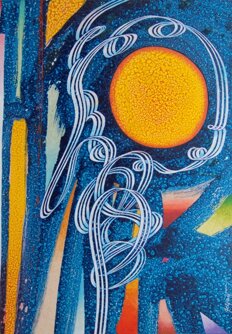
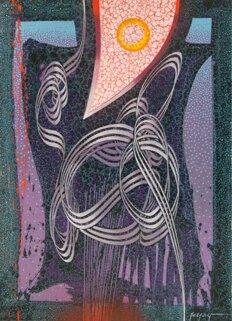
Closer to the sun
As the light appears
acrylic on prepared cardboard 50 x 70 cm
acrylic on prepared cardboard 50 x 70 cm
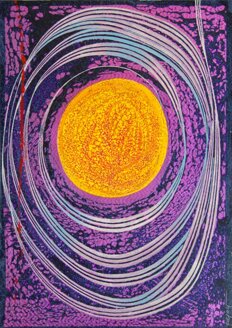
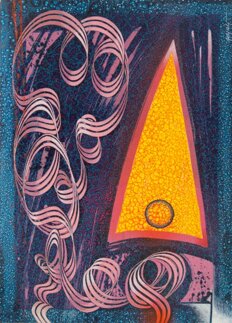
Touching the sky
Extraordinary planet
acrylic on prepared cardboard 50 x 70 cm
acrylic on prepared cardboard 50 x 70 cm
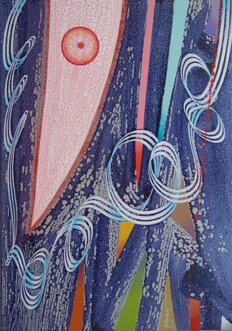
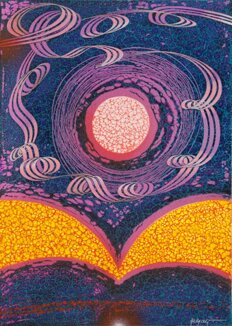
Open book
Lives in color
acrylic on prepared cardboard 50 x 70 cm
acrylic on prepared cardboard 50 x 70 cm
His Biography
www.felpati.it
The Critique
Armando Felpati is the protagonist of a long career characterized by a triple constant of loyalty: to his own themes, even with the infinite variations introduced, to the artistic circles he is part of, and to places. The first point will be discussed; as for the decades-long service in Associations and Galleries, a rare occurrence in other Italian regions, the pleasure of exhibiting together with trusted friends seems to me a Venetian characteristic and at the same time descends from the artist's cordial character. The fact remains that the cultural Associations of Padua seem to operate like the partnerships of the late nineteenth and early twentieth centuries when it was common for groups of painters to work together both on the executive level and in organizing exhibitions. It is easy to cite, in this regard, the so-called Barbizon School or the series of group exhibitions of the French Impressionists and German Expressionists, not to mention similar, but less close, Italian examples. If one pays attention to the places where Felpati has exhibited, Padua emerges, and perhaps even more so its province. Looking at the list of exhibitions means reviewing the geography of the great Venetian province. In fact, Felpati's career has unfolded with a series of regular appointments year after year, with rare projections beyond "his" territory. I appreciate the work but do not know the artist, so I will avoid risky considerations.
The first element to consider is a massive body of work based on two graphic inventions, the stylized figures and the parallel scrolls that in various ways decorate his canvases, sometimes becoming the dominant element, the true subject. Other analogies could be found, but Felpati, in his own way, has limited himself to working in the same manner as Giuseppe Capogrossi, who became known not for his figurative works but for the invention of the "little comb" gracefully repeated a thousand times with as many variations on the theme. Instead, the few significant critics of the Venetian master have insisted on his being a graphic artist rather than a painter. In the current scale of values, this means expressing a judgment that diminishes his figure, which is that of a painter of great talent. Capogrossi, on the contrary, has always been held in higher regard. Yet the Roman artist built a career on an invention and expressed a motivation about the content of his paintings perfectly analogous ("My ambition is to help people see what their eyes do not perceive: the perspective of the space in which their opinions and actions are born") to that signed by Felpati: "I intend to offer the reader an interpretative hypothesis, which does not stop at aesthetic superficiality, but captures the intrinsic vision of the visual message."
How can the difference in destinies be explained? Capogrossi was born in Rome to a family of noble descent and had the support of critics and galleries capable of making an artist's fortune. Felpati has enjoyed none of these chances and is, indeed, still searching for a critic who can effectively interpret and illustrate his work in depth.
The profile of Aldo Maria Pero – www.artedelXXIsecolo.it – June 2014
The works of Armando Felpati, not being bearers of figures found in everyday reality, are subject to the personal interpretation of the viewer, who is called to interact with the author: this is realized in an empathetic relationship that is deeper the greater the viewer's sensitivity.
It is therefore not enough to understand what you see in the painting, but you must be able to feel the message it conveys. And this feeling depends on our ability to read.
As a good reader, not a critic, I find in Felpati an attempt, a tension towards another dimension that goes beyond the things we know in our daily lives.
This dimension is characterized by absence: of matter as we know it; of man and his manifestations; of the deafening noise that characterizes our society.
It is a cosmic silence, a silence that invites meditation as a push towards contemplation.
The dimension explored by Felpati is full of symbols that lead us to probe deeply into the essence of being: quoting Mancuso, we are in a universe that is energy, an expanding energy, a source of continuous and perpetual creation: we and matter are only its fruit and in it sooner or later we must be reabsorbed.
Immersion in the energy/cosmos dimension can be read as an attempt to overcome the existential malaise deriving from the reality in which we are forced to live: a world that has lost all principles, that has given up seeking the meaning of life, that has lost its own humanity. A world that lives on the surface, that seems to be devoid of meaning and prospects.
By projecting us into the energy/cosmos dimension, Felpati warns us by reminding us that in relation to the universe we are nothing, less than an atom.
Felpati conveys his vision of the great themes of existence through a painting that we could define as expressive/abstract language, but, on closer inspection, it is born from the sign and is completed with color, ennobling itself, indeed, sublimating itself thanks to light.
It is a gestural painting, but certainly not instinctive: his is a reasoned gesture, guided by a skilled hand, supported by a well-defined thought that each of us is invited to decipher and that helps us understand the world we live in.
The sign reminds us of his training as a graphic artist and creates continuous vortices, explosions, escapes: a sign that gives meaning to movement by identifying it with that primordial energy from which everything proceeds: a perpetual motion, an image of creation in fieri.
His sign also produces elliptical or circular forms that are lost in infinity in a projection of immeasurable spaces. These are scrolls that make one think of the loss of the center of Nietzschean memory: they carry within themselves a sense of disorientation perhaps caused by that lack of a point or a reference grip that characterizes contemporary civilization.
The acrylic color, in its coldness and especially in its brightness, makes one think of sidereal spaces, the seat of that energy that is still in its pure state, continuously generating, still devoid of the contaminations that occurred when it became matter. The tones, often very intense, ranging from aggressive red, to orange, to pink, can be read as representations of fire, which is the highest expression of that primordial generative energy.
Finally, light plays a fundamental role in Felpati's works. It has the capacity and, I would say, the function of blending the figures the artist proposes into a unicum, giving the work an extraordinary compositional balance that becomes a way of saying that the origin is not chaos, but that there is a higher order from which everything descends and to which everything, ourselves included, must return.
From all this it follows that Felpati's works investigate the meaning of life, that they do not intend to represent the existent, but being in its essence.
They are works that present us with universal and eternal dimensions in which being, which is energy, identifies itself in a universe that has no limits of space and time, that is not static, but in continuous expansion which is equivalent to perpetual creation of which we are only an infinitesimal part, albeit a thinking one.
Umberto Marinello
From the presentation of the exhibition Cosmic Lines – changing trend at the P.P.Pasolini Library in Cadoneghe (Pd) - December 14, 2013
There are many ways to express the discomfort of living in a world that seems to have lost all modesty, among people who act only for their own gain, having put aside all sense of humanity.
There are those who shout, those who protest, those who denounce.
But there are also those who instead let themselves be carried away by imagination and offer in exchange a non-place where one can take refuge and immerse oneself in a total silence where harmony reigns.
Armando Felpati is one of these.
He is fundamentally a graphic artist turned painter: this is evidenced by the precision of the sign, a sure gesture guided by a skilled hand, the punctuality of the interweavings and lines of flight, the explosions of immense bodies that seem ungovernable, scrolls that intersect creating the impression of a perpetual motion that, looking at the whole, leads you to identify a balance and a harmony that have nothing to do or share with our world.
The acrylic color, with its brilliance, but also with its coldness, transports the viewer into a sidereal world, where everything takes on a different value, where space is limitless, where energy reigns supreme.
Here, this is perhaps the deepest meaning of Felpati's works: to rediscover where we probably come from, to foresee where we will end up, remembering that our true home is the universe where everything begins and ends in pure energy, making it clear that matter is nothing but a degradation of that energy.
And that energy does not manifest itself only in the escape routes, in the explosions, in the tangle of scrolls: it is the light that, together with color and sign, is the fundamental element that allows the painting to come towards you, almost to attack you, making you understand how small we and our world are, that gives it a connotation of movement without limits, of an ungovernable force, of a space that surpasses all our knowledge, of a dimension that goes beyond our knowledge, of a universe that is in continuous expansion.
Yes, Felpati feels projected towards horizons so vast that they end up disrupting even our thoughts.
Umberto Marinello - A character of the month from Quatro Ciàcoe - June 2013
Privacy Policy
Cookie Policy
Legal Notice